
Short-Form vs Long-Form Video Editing: Which Does Your Business Actually Need?
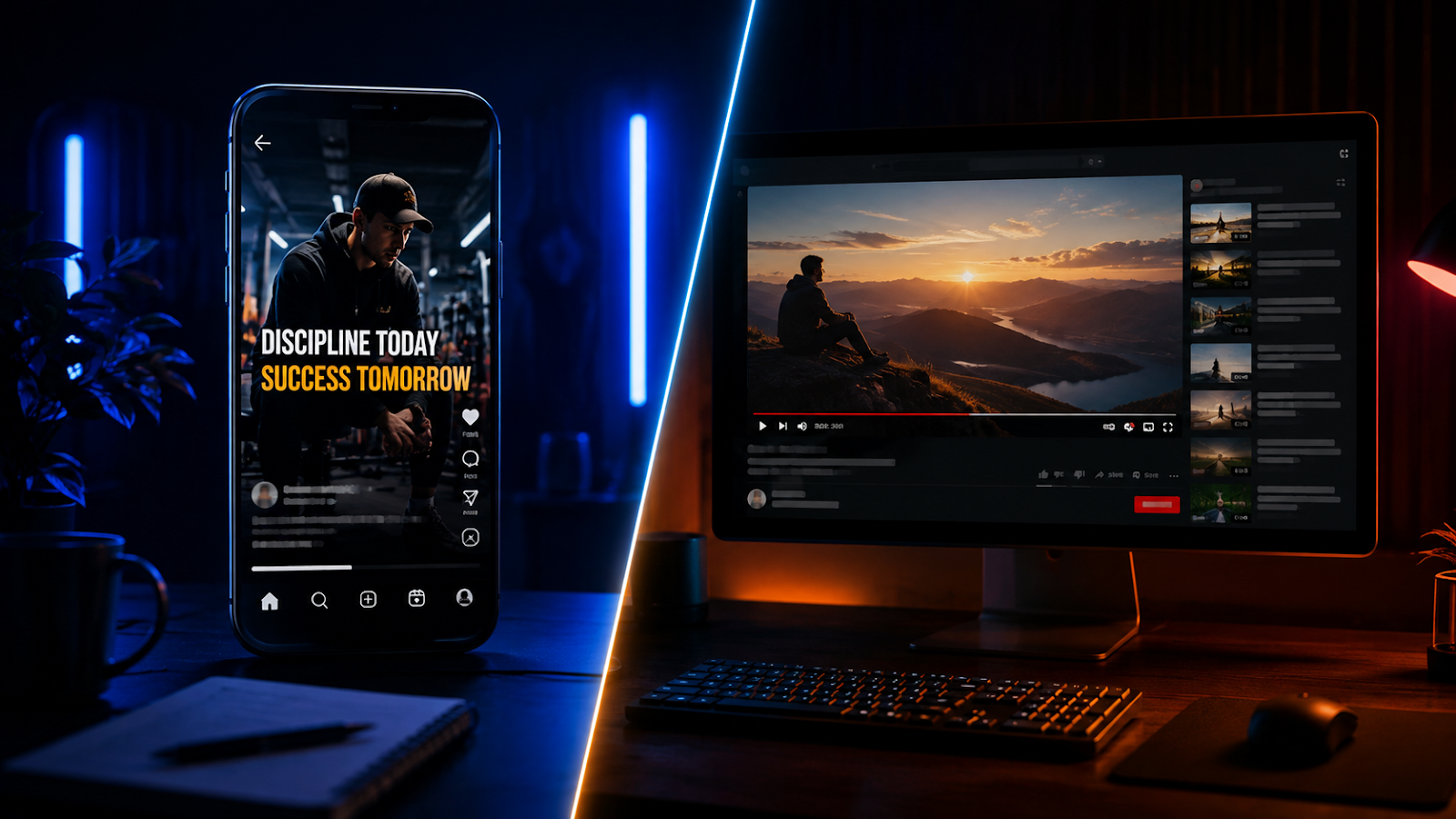
Short-form and long-form video editing solve different problems, and confusing the two is why a lot of content underperforms.
Short-form editing (Reels, Shorts, TikTok) is built around the first 1.5 seconds. Every cut fights for attention against a fast-scrolling thumb. Pacing is tight, captions are almost mandatory, and the goal is usually reach — getting in front of people who don't know you yet.
Long-form editing (YouTube, interviews, talking-head content) plays a different game. Viewers have already chosen to click, so the job shifts from "stop the scroll" to "hold the watch time." Pacing can breathe more, but structure matters — a clear open, a reason to keep watching every few minutes, and pacing that never lets a dead patch sit too long.
Which one does your business need?
If you're building awareness and want new people discovering you — short-form first.
If you're nurturing an audience that already knows you and want depth, trust, or SEO search traffic — long-form.
Most brands that grow fastest actually do both: one long-form piece re-cut into 4–6 short-form clips. This is often the most efficient use of a single shoot.
The mistake to avoid is applying short-form pacing logic to a 20-minute video, or long-form patience to a 30-second Reel. Different formats, different editing brains.
Want edits like this?
Send your footage and I’ll turn it around fast — packages from US$50.
Keep reading
Motion Graphics for Social Media: When They Help (and When They Just Slow You Down)
Motion graphics can elevate a video — or bury a simple message under unnecessary polish. Here's how to know when they're worth the extra time.
Read articleTalking-Head Video Editing: How to Keep Viewers Watching One Person Talk
No B-roll, no cutaways — just one person and a camera. Here's how editing alone can keep a talking-head video from losing viewers halfway through.
Read article